THANK YOU FOR SUBSCRIBING



Gov CIO Outlook Weekly Brief
Be first to read the latest tech news, Industry Leader's Insights, and CIO interviews of medium and large enterprises exclusively from Gov CIO Outlook
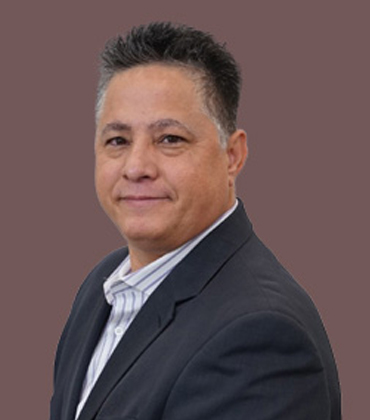
In an era defined by cyber conflict, rapid modernization demands and increasing pressure on federal agencies to deliver secure, resilient and mission-ready IT environments, MFGS, Inc. has become one of the most influential forces. Led by its President and CEO, Robert J. Makheja, it has built its reputation on discipline, innovation and an uncompromising commitment to customer mission outcomes. How has MFGS, Inc. established itself as a leader in federal cybersecurity and AI? Makheja is a visionary leader who brings vast experience in handling very large tech mergers and acquisitions within enterprise environments, informing a practical understanding of how complex organizations manage change at scale, and leading companies to significant growth. That perspective shapes his view that for the U.S. Department of Defense (DoD) and Intelligence Communities (IC), reactive support is no longer sufficient. Success now demands a disciplined, predictable approach to cybersecurity, modernization and enterprise technology adoption. “Reactive isn’t good enough. Proactive is required. Predictable is where we must be,” says Makheja. This philosophy has propelled MFGS, Inc. to remarkable heights. An independent government certified supplier of world-class enterprise-grade software solutions, the company helps U.S. government agencies secure, manage and optimize their IT environments while accelerating delivery in the most complex and regulated federal spaces. Its portfolio spans cybersecurity, AI, hybrid-cloud operations, data analytics and secure-by-design modernization. With thousands of employees, partners and customers—along with a robust ecosystem of distributors, resellers and integrators—MFGS, Inc. ensures its enterprise software capabilities reach the agencies that need them most. Every engagement is handled with the determination to achieve mission success, no matter the scale or sensitivity of the challenge.
Traffic calming has shifted from isolated, one-off devices to coordinated, data-driven citywide systems. Public agencies are recognizing that roadway risk cannot be accurately assessed and mitigated by focusing on a single sign or corridor. Real safety emerges when multiple roadside elements work together, reinforced by data tracking driver behavior across locations. But these connected systems matter only if each device stays compliant and functional in real-world conditions. A speed sign that stops working stops changing behavior. How does Radarsign approach long-term traffic calming system design? Radarsign elevates traffic calming beyond “install and hope” toward intentionally designed, durable infrastructure that measures, adapts, remains compliant, and delivers proven safety outcomes long term. “Our founding principle lies in designing enduring systems that help agencies navigate complex traffic safety demands,” says Nicole Summerlin, marketing director. A traffic safety manufacturer, Radarsign was founded by three partners who bring law enforcement experience, advanced engineering and business leadership to address high-speed driving. Before launching Radarsign, the trio observed a recurring problem in the market. Conventional driver feedback products worked in theory but failed in the real world. Exposure to harsh weather, vibrations, vandalism or vehicle impacts often left signs non-functional. This insight led them to a defining question: “What if physical durability was treated as important as the technology designed to influence driver behavior?”.


Emad Elshafei, Ph.D., P.E., PTOE, Chief of Traffic and Transportation, Department of Public Works, City of Rockville

Behzad Zamanian, CIO, Washoe County Technology Services

Stephen Dyer, Director of Information Technology, City of Coral Springs, FL

Scot Barker, Chief Innovation Officer, City of Burlington
Nelson Gonzalez, Assistant Innovation & Technology Director / CISO, City of Coral Gables
Radar speed sign systems grow through safety awareness, smart technology adoption, urban expansion, and increasing demand for non-enforcement traffic calming.
Modern government and DoD IT solutions enhance cybersecurity, enable cloud transformation, strengthen resilience, and support data-driven mission execution.
Predictable Systems for Public Missions
At the forefront of this issue, MFGS, Inc. is recognized as Government and DOD IT Solutions of the Year 2026. Under the leadership of President and CEO Robert J. Makheja, the company has established itself as a trusted steward of enterprise-grade software portfolios embedded across DoD and Intelligence Community environments. Its integrated lifecycle model unifies DevSecOps, cybersecurity, hybrid cloud operations and analytics into cohesive delivery frameworks. By embedding AI and automation into repeatable mission-ready use cases, MFGS enables agencies to accelerate modernization while maintaining regulatory compliance and operational continuity. From Affordable Care Act systems stabilization to defensegrade validation environments, its solutions are engineered for resilience under real-world load.
Extending the conversation into public safety infrastructure, Radarsign is recognized as Top Radar Speed Sign Traffic Calming System 2026. Founded on the principle that durability must match behavioral technology, the company designs armored radar speed signs built with protective aluminum structures and solar efficiency to ensure long-term field performance. With full compliance to the 11th Edition of the MUTCD and modular update capabilities, Radarsign supports agencies transitioning from isolated installations to coordinated fleet-level deployments. Its systems-based approach emphasizes measurable safety outcomes rather than temporary enforcement gains.
Across federal IT modernization and municipal infrastructure, safety and reliability emerge as the defining requirements. Technology must operate predictably under scrutiny, scale securely and remain compliant across changing regulatory environments. We invite readers to explore how disciplined lifecycle integration and engineered durability are shaping the next generation of public sector performance.