

THANK YOU FOR SUBSCRIBING

Gov CIO Outlook Weekly Brief
Be first to read the latest tech news, Industry Leader's Insights, and CIO interviews of medium and large enterprises exclusively from Gov CIO Outlook

FACES Software was built to address one of the most persistent challenges in crime investigations— delay. When witness memories are fresh and actionable leads matter most, traditional sketching processes often slow momentum. Designed for using directly at the scene of a crime, the platform enables victims and eyewitnesses to participate immediately by generating facial composites of suspects in real time, helping investigators act while critical details are still clear. Traditionally, creating a suspect sketch required access to a trained artist and a return to the police station, introducing time, cost and logistical barriers. FACES removes that dependency. By placing composite creation into the hands of first responders, the platform allows investigations to move forward without waiting, turning descriptions into usable visual references at the moment they are needed most. Its user-friendly interface simplifies the task of translating human memory into a visual reference. On one side of the screen is a sketching canvas, while the other houses a database of more than 4,500 hand-drawn facial features, including eyes, noses, ears, hairlines and expressions. Users build composites by selecting and adjusting features. “Creating a facial composite on FACES is as easy as building an avatar,” says Greg J. Micek, Sr, owner. Each composite generated through FACES carries its own binary code, resulting in a composite that can be shared digitally across jurisdictions. This structure allows detectives to circulate images quickly, supporting collaboration in time-sensitive investigations where clarity and speed are critical.
Decision Lens allows government agencies to make better, faster decisions by overcoming the current challenges of data management, prioritization, future planning and year-of-execution funding. The strength lies in its integrated approach. Not only does its SaaS-based solution improve each of these planning phases, but it delivers a sustained operational advantage by bringing them all together into a single, cohesive platform. The result? Agencies can make smarter decisions, finally breaking free from the siloed methods that have constrained planning, budgeting and resource allocation. A holistic and modernized approach ensures every taxpayer’s dollar is strategically spent, driving impactful change where it matters most. Decision Lens matters now more than ever. Government agencies, particularly the Department of Defense (DoD), are at a crossroads. Reliance on manual, static processes to plan, prioritize and allocate funds is increasingly misaligned with today’s fast-paced, unpredictable world. How do we respond to emerging threats overnight? How can we maintain long-term readiness or shore up our industrial supplier base? “These pressing questions have remained at the heart of Decision Lens, which provides tools to optimize planning, provide accountability and allow for data-driven, evidence-based decisions,” says John Saaty, CEO. “Real-time visibility into how much money has been allocated, spent and remains available also helps them determine where the money is being over or underused.” Decision Lens is a vital tool for the Army, Navy and Air Force, as well as for federal civilian agencies and state and local governments.


Modern courtrooms need modern solutions. But many municipal courts still rely on outdated, paper intensive processes leaving Clerks overwhelmed by manual tasks, data entry, and juggling multiple disconnected systems. That’s where JusticeONE steps in. With a thirty (30) year track record of successfully delivering municipal court solutions, JusticeONE replaces inefficiency with a process driven, streamlined, cloud-based technology platform. Purpose-built for courts, the solution digitizes operations from start to finish—reducing paperwork, connecting people with data, and helping court teams focus on what really matters: efficiently serving justice. “JusticeONE Court was built with a clear vision to modernize municipal court technology from the ground up. Rather than simply digitize old processes, we have created a comprehensive system that delivers usability and workflow mapping so court administrators, clerks, and judicial personnel can better manage all aspects of caseloads,” states Jason Norton, CEO. “Leveraging a secure web-based platform and modern technology components, our system positions courts for the future and allows our company to deliver continued feature expansion and innovation.” Built on Microsoft’s Azure.Gov Cloud, the JusticeONE Platform offers unmatched security, CJIS compliance, and industry-leading uptime and scalability. It meets all federal, state, and local requirements without burdening municipal IT teams or requiring costly hardware investments. Additionally, this court platform allows for authorized clerks to run individual or batch criminal histories through the FBI’s NCIC portal with just a few clicks. Combined with the JusticeONE RMS Law Enforcement suite, JusticeONE Court allows municipalities to have an end-to-end solution serving both police and court personnel in a fully integrated manner. In addition to decades of expertise, JusticeONE Court is designed and supported by people who have courtroom experience. Over 40% of JusticeONE employees worked in court and public safety and the remaining 60% are technology experts. With a phenomenal culture that has retained the original coders and added more multi-faceted technologists, the capacity of the team is continually growing. “Our platform is built with real-world court knowledge, not assumptions and delivers functionality and efficiency in a way that courts actually perform.” says Jason Norton, CEO.

Brian Podany, Police Chief/Safety Services Manager, City of Blaine, Minnesota
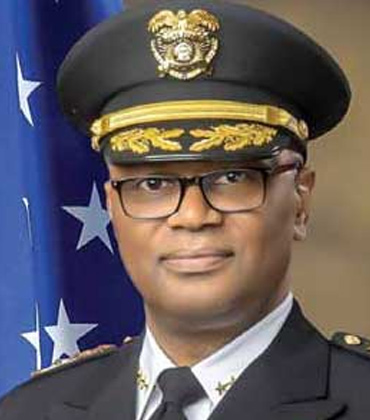
Keith Meadows, Chief of Police, City of South Fulton Georgia

Hans Lehman, Assistant Chief of Police, City of Lakeland

Andrew Mills, Chief of Police, City of Palm Springs

Andy Satterfield, Chief of Police at Sterling Heights Police Department, City of Sterling Heights
Facial recognition raises ethical concerns around bias, privacy, and accountability, requiring strict oversight, transparency, and responsible, limited use in public safety.
Criminal facial composite software enhances law enforcement efficiency by generating accurate suspect images, reducing misidentification risks when used correctly.
Operational Precision and Trust in Public Safety Technology
At the center of the edition is our cover story on Faces Software, recognized as the Top Criminal Facial Composite Software 2026. Built for frontline use, the platform enables first responders to generate accurate facial composites directly at the scene, preserving critical witness details before memory fades. By removing reliance on specialized sketch artists and centralized workflows, investigations move faster and leads become actionable sooner. A structured library of facial features and seamless digital sharing support coordination across agencies and jurisdictions. The result is practical and immediate. Descriptions convert quickly into visual intelligence that investigators can use in real time.
Several agencies featured in these pages reflect a similar shift in mindset. Technology is no longer treated as an add-on layered onto existing processes. It is embedded directly into daily operations to strengthen coordination, situational awareness, and officer safety. In Tucson, Chief of Police, Chad Kasmar outlines the department’s transition to the CSARC, a consolidated real-time analytical and response center that integrates data, video, and intelligence across police, fire, dispatch, and alternative responders. The model prioritizes interoperability and shared visibility, ensuring personnel have immediate access to actionable information. The emphasis is execution, not accumulation of tools.
Alongside systems and infrastructure, leadership conduct remains equally decisive. In City of Blaine, Minnesota, Police Chief/Safety Services Manager, Brian Podany frames respect, integrity, and accountability as operational standards rather than abstract principles. His view is direct. Trust is built through consistent behavior and transparent decision making, reinforced every day through actions, not messaging.
Taken together, these stories point to a clear conclusion. Sustainable progress in public safety comes from practical tools, disciplined implementation, and leadership that earns public confidence through results. The organizations highlighted here demonstrate what that looks like in practice.